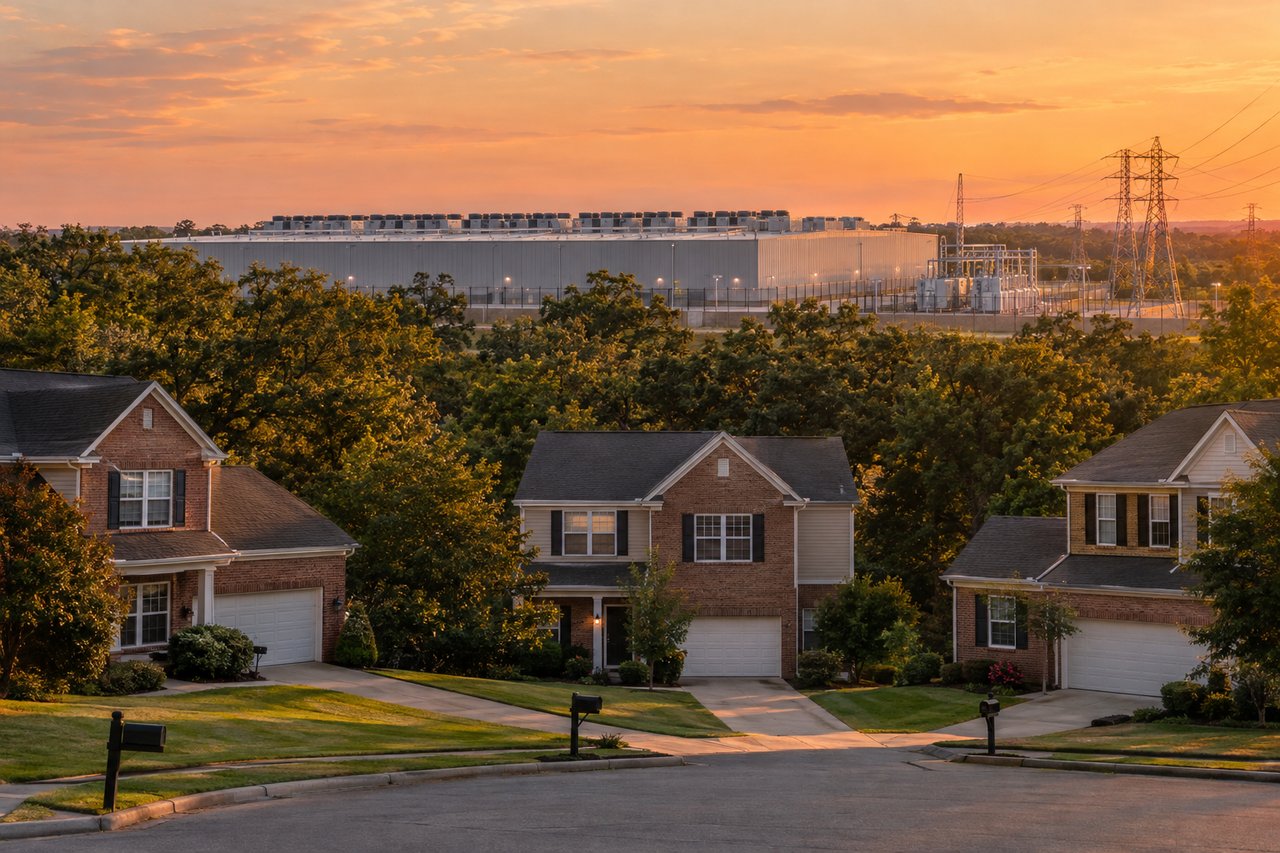
Data centers probably weren't on your radar when you started thinking about buying or selling a home. School districts? Sure. Commute times? Of course. A massive building full of humming servers down the road? Not exactly top of mind.
That's starting to change — and if you're navigating the market right now, it's worth understanding why.
Why Data Centers Are Suddenly Everywhere
In 2015, only about a dozen ZIP codes in the U.S. had a large data center. By the first half of 2026, that number jumped to more than 100 — and it's expected to keep climbing. Growth is concentrated in states like Texas, Virginia, Georgia, Pennsylvania, Ohio, Utah, Illinois, Arizona, Indiana, and Nevada.
Translation: more buyers will run into a data center during their search, and more homeowners will hear about one breaking ground nearby. Naturally, everyone wants to know the same thing — what does this mean for me?
Will a Data Center Hurt Your Home Value?
Here's the reassuring part: the data doesn't back that fear up. Researchers compared communities with large data centers to similar communities without them, and a recent HousingWire report noted that home values in data center ZIP codes tracked closely with comparable areas — no dramatic gains, no dramatic losses.
That said, results aren't universal. Proximity, surrounding development, and the specific facility all play a role. But for most buyers and sellers, there's no evidence a data center alone will tank — or spike — your home's value.
The Real Tradeoffs Worth Knowing
Like any major development, data centers bring a mix of upside and things to watch:
The Benefits:
- Growth momentum — data centers often bring broader development and property tax revenue that funds community improvements.
- Infrastructure upgrades — new roads, fiber lines, and power infrastructure frequently follow.
- Local economic boost — jobs and business activity that can support housing demand.
The Considerations:
- Visual impact — large facilities, substations, and transmission lines can change a neighborhood's look.
- Noise — cooling systems, generators, and construction traffic may be noticeable up close.
- Resource demand — these facilities use significant electricity and water, which can raise questions about local utility costs.
On that last point, J.P. Blackwood of the Ohio Consumers' Counsel told HousingWire that utility rate increases tend to happen gradually, and that data centers are just one of several factors driving electricity prices — not the sole cause, and something many regions are actively working to manage.
What Should You Actually Do About It?
If you're buying: Find out what's already built nearby — and what's proposed or approved. Weigh the facility's distance from the property, potential noise, and whether it could affect your utility budget down the line.
If you're selling: Don't assume a nearby data center is a dealbreaker. But be ready for questions. Knowing the construction timeline, noise levels, and future development plans lets you address buyer concerns before they become objections.
Curious what's happening near a home you're watching, or the one you're in right now? Browse current listings to see what's available in your area today.
Bottom Line
Data centers are becoming part of the real estate conversation whether we're ready or not. The good news? The fear is bigger than the data supports right now. But being informed — about what's built, what's proposed, and what it could mean for your budget — puts you in a stronger position either way.
Have a data center nearby or hear one's coming to your neighborhood? Reach out and let's talk about what it could mean for your home value or your next move.